Ministry of Economy
& Tourism

Driving the UAE's transformation into a globally competitive, diversified, and knowledge-based economy — under the leadership of H.E. Abdulla bin Touq Al Marri.

From Oil Dependency to a Knowledge-Based Economy

The United Arab Emirates has undergone one of the most remarkable economic metamorphoses of the 21st century. When the nation was founded in 1971, hydrocarbons accounted for virtually all government revenue. Today, the non-oil sector contributes over 70% of GDP — a testament to decades of deliberate policy design, regulatory innovation, and strategic investment that have reshaped the fundamental character of the Emirati economy.

Central to this transformation has been the UAE's pioneering approach to free zones. With over 45 free zones across the seven emirates — including the Dubai International Financial Centre (DIFC), Abu Dhabi Global Market (ADGM), Jebel Ali Free Zone (JAFZA), and Dubai Multi Commodities Centre (DMCC) — the UAE created specialized economic ecosystems offering 100% foreign ownership, zero corporate tax incentives, and streamlined regulatory frameworks long before the mainland adopted similar reforms.

The landmark Companies Law amendment of 2020, championed by H.E. Abdulla bin Touq Al Marri, eliminated the longstanding requirement for 51% Emirati ownership of mainland companies. This single reform — enabling 100% foreign ownership across more than 1,000 commercial activities — unlocked a new era of foreign direct investment, with FDI inflows surging past $22.7 billion in 2022 alone, making the UAE the largest FDI recipient in the Arab world.

Complementary reforms in intellectual property protection, bankruptcy law modernization, and the introduction of long-term golden visas for investors, entrepreneurs, and skilled professionals have further cemented the UAE's position as one of the most business-friendly jurisdictions on the planet — ranked consistently among the top 20 globally in the World Bank's Ease of Doing Business Index.
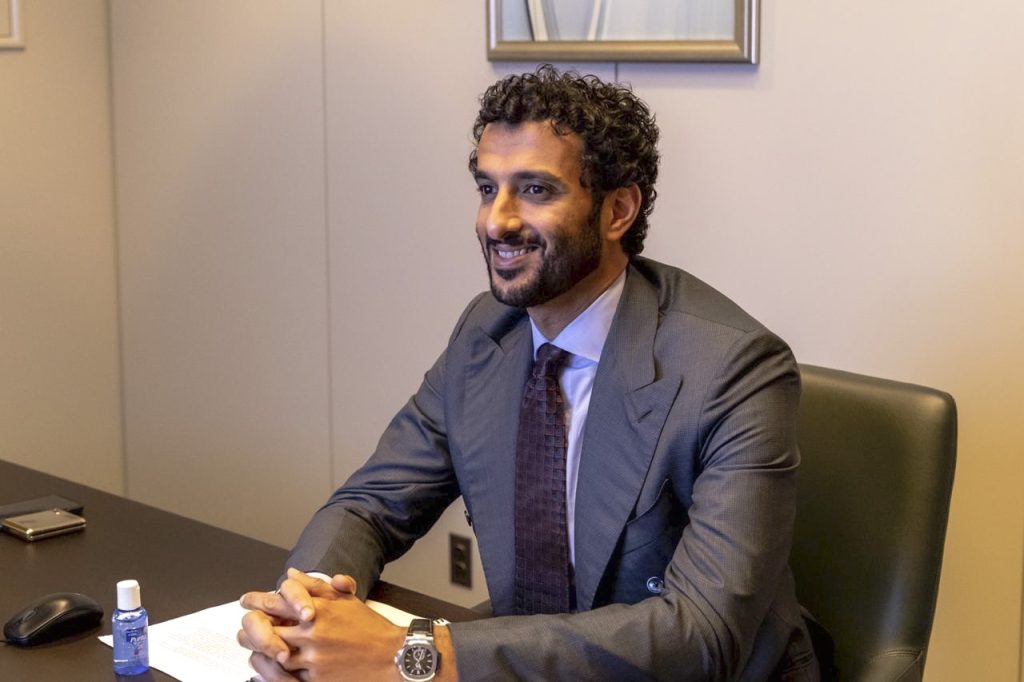
H.E. Abdulla bin Touq Al Marri discussing UAE GDP growth and economic transformation

Key Reform Milestones

  • 2020 — 100% foreign ownership law enacted
  • 2021 — Commercial Companies Law overhaul
  • 2022 — Corporate Tax framework introduced (9%)
  • 2023 — Anti-Money Laundering regulations strengthened
  • 2024 — Golden Visa expansion to broader categories
Diversification Beyond Oil

The UAE's non-oil GDP has grown at a compound annual rate exceeding 4.5% since 2018, powered by strategic investments in manufacturing, logistics, financial services, and technology. Here is a sectoral breakdown of contributions to the diversified economy.

Non-Oil GDP Contribution by Sector (2024)

Wholesale & Retail Trade 22%
Financial Services & Insurance 18%
Manufacturing & Industry 14%
Construction & Real Estate 13%
Tourism & Hospitality 12%
Transport & Logistics 11%
Technology & Innovation 10%

Sector Highlights

Manufacturing & Industry

The UAE's "Operation 300bn" strategy aims to boost the industrial sector's contribution to AED 300 billion by 2031. Advanced manufacturing zones in Abu Dhabi (KIZAD), Ras Al Khaimah, and Sharjah are attracting petrochemical, pharmaceutical, and food processing investments. The Emirates Development Bank has committed over AED 30 billion in industrial financing since 2021.

Logistics & Transport

Positioned at the crossroads of Asia, Africa, and Europe, the UAE processes over 15% of global trade flows. Dubai's Jebel Ali Port — the largest in the Middle East — handles over 13.5 million TEUs annually. The UAE's logistics sector is projected to reach $30 billion by 2030, underpinned by Etihad Rail, expanded aviation capacity, and smart port technologies.

Financial Services

DIFC and ADGM together host over 4,500 registered firms managing assets exceeding $850 billion. The UAE's banking sector assets surpass AED 3.5 trillion, while the insurance and wealth management industries continue to attract global institutions seeking regional headquarters positions.

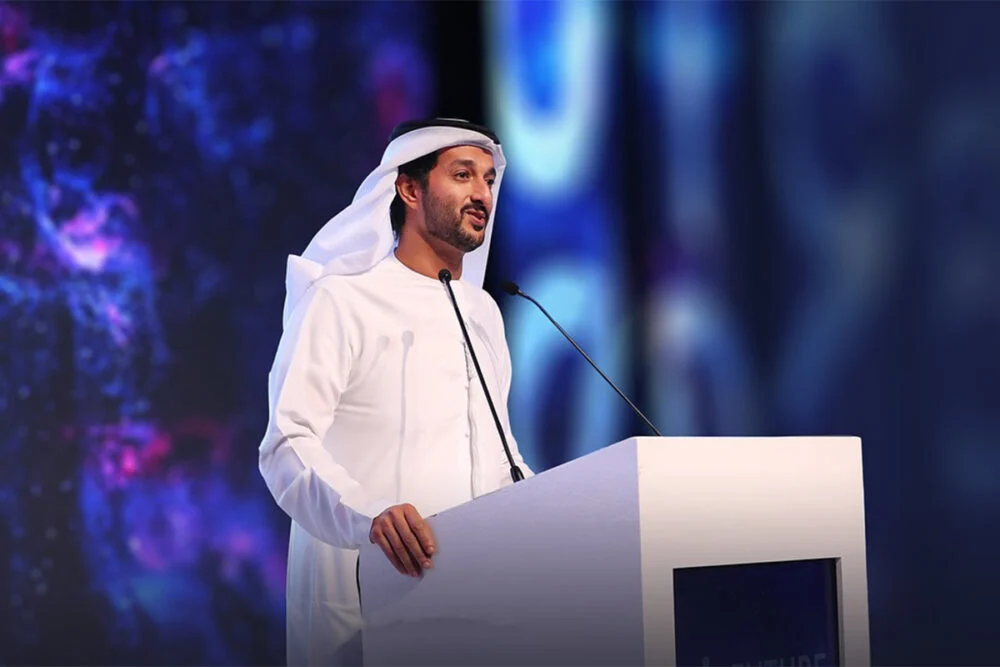
H.E. Abdulla bin Touq Al Marri addressing tourism and economic growth strategy

Tourism Growth Strategy

The UAE's tourism sector stands as a pillar of economic diversification, with a national target of welcoming 30 million international visitors annually by 2031. In 2023, the nation attracted over 28 million tourists, generating AED 180 billion in direct tourism revenue and supporting over 700,000 jobs across the hospitality, aviation, and entertainment industries.

Dubai alone has cemented its status as the world's most visited city, while Abu Dhabi's cultural tourism circuit — anchored by the Louvre Abu Dhabi, the forthcoming Guggenheim Abu Dhabi, and the Zayed National Museum on Saadiyat Island — is positioning the capital as a global cultural destination. The transformation of the Expo 2020 site into Expo City Dubai has created a permanent innovation district attracting millions of annual visitors.

Beyond urban tourism, the UAE is investing heavily in eco-tourism and adventure tourism — from Ras Al Khaimah's Jebel Jais mountain experiences (home to the world's longest zipline) to Fujairah's marine conservation zones, and Abu Dhabi's mangrove kayaking and desert conservation reserves. These initiatives align with the UAE's Net Zero 2050 strategy and appeal to the rapidly growing sustainable tourism segment.

0
Visitor Target by 2031
0
Hotels & Resorts Nationwide
0
AED Tourism Revenue (2023)
0
Tourism Sector Jobs

Digital Economy Initiatives

The UAE Digital Economy Strategy aims to double the digital economy's contribution to GDP from 9.7% to 19.4% by 2031 — making it one of the most ambitious national digital transformation agendas in the world.

AI Adoption & Strategy

The UAE was the first nation to appoint a Minister of State for Artificial Intelligence in 2017, signaling its intent to lead global AI governance. The National AI Strategy 2031 targets a 14% contribution of AI to GDP — equivalent to $96 billion. Initiatives include the Mohamed bin Zayed University of Artificial Intelligence (MBZUAI), the world's first graduate-level AI research university, alongside government-wide AI integration through the "UAE Strategy for AI" covering healthcare, transport, education, and public administration. The nation hosts the annual World Government Summit's AI sessions and has invested over $2 billion in AI research infrastructure.

Blockchain & Digital Governance

Dubai's Blockchain Strategy aims to become the first blockchain-powered government by transitioning 100% of applicable government transactions to distributed ledger technology. The initiative is projected to save 25.1 million work hours, 398 million printed documents, and $1.5 billion annually. The Dubai Multi Commodities Centre (DMCC) Crypto Centre has become the region's largest blockchain and Web3 hub, hosting over 600 crypto and blockchain companies. The Virtual Assets Regulatory Authority (VARA) — the world's first independent regulator for virtual assets — provides regulatory clarity that has attracted Binance, Bybit, and other major crypto exchanges to establish regulated operations in Dubai.

Fintech & Smart Cities

The UAE's fintech ecosystem has grown to over 500 licensed firms, with DIFC's Innovation Hub and ADGM's RegLab serving as global sandboxes for financial technology experimentation. The Central Bank's digital dirham project — a central bank digital currency (CBDC) — is in advanced pilot stages. Meanwhile, smart city initiatives across Dubai (Smart Dubai 2021+), Abu Dhabi (Masdar City), and Sharjah leverage IoT, 5G, and data analytics to optimize urban services from traffic management to waste reduction, energy efficiency, and healthcare delivery, establishing the UAE as a testbed for urban technology innovation worldwide.

Policy Frameworks

The legal and regulatory architecture underpinning the UAE's economic competitiveness — designed to attract capital, protect innovation, and empower businesses of all sizes.

The UAE's trade policy under H.E. Abdulla bin Touq Al Marri has shifted from multilateral-only engagement to a dynamic dual-track approach combining WTO commitments with an aggressive bilateral Comprehensive Economic Partnership Agreement (CEPA) program. Since 2021, the UAE has signed CEPAs with India, Indonesia, Turkey, Israel, Georgia, Cambodia, and several other nations — collectively covering markets representing over 3 billion consumers.

These agreements go far beyond tariff elimination. They encompass mutual recognition of professional qualifications, digital trade facilitation (including e-invoicing and electronic certificates of origin), government procurement access, regulatory cooperation on standards, and dispute resolution mechanisms. The India CEPA alone is projected to increase bilateral trade from $60 billion to $100 billion within five years.

The Ministry has also established trade promotion offices in over 30 countries and launched the "UAE Traders" platform — a digital marketplace connecting UAE exporters with global buyers, with built-in trade finance facilitation through partner banks.

The UAE's investment policy framework is anchored by the Foreign Direct Investment Law (Federal Decree-Law No. 19 of 2018, amended 2020), which opened over 1,000 economic activities to 100% foreign ownership outside free zones. This was complemented by the establishment of the Abu Dhabi Investment Office (ADIO) and Dubai FDI — dedicated agencies offering bespoke incentive packages including land grants, subsidized utilities, and co-investment programs.

The Ministry of Economy's investment promotion strategy targets ten priority sectors: advanced technology, healthcare, education, agri-food, renewable energy, space, fintech, logistics, creative industries, and manufacturing. Each sector has a dedicated investment attraction team and sector-specific incentive structures.

Investor protection has been enhanced through the new Arbitration Law (aligned with UNCITRAL model law), strengthened commercial court procedures, and bilateral investment treaties with over 100 countries — providing robust legal safeguards that rank the UAE among the most protected investment jurisdictions globally.

Small and medium enterprises account for over 94% of companies operating in the UAE and contribute approximately 63% of non-oil GDP. The Ministry of Economy's National SME Program, launched in partnership with the Khalifa Fund and the Mohammed bin Rashid Fund for SMEs, provides a comprehensive support ecosystem encompassing low-interest financing (rates starting at 2%), mentorship networks, market access facilitation, and procurement preferences for government contracts.

The "Entrepreneurial Nation" initiative targets growing the number of SMEs from 350,000 to 1 million by 2030, with a focus on technology startups, women-led enterprises, and youth entrepreneurship. The UAE's startup ecosystem has attracted over $3 billion in venture capital since 2019, with hubs like Hub71 (Abu Dhabi), Dubai Future District, and Sharjah Entrepreneurship Centre providing co-working spaces, accelerator programs, and access to corporate partnerships.

Regulatory simplification includes the "Instant Licence" — a digital business license issued within five minutes — and the UAE Pass integration enabling entrepreneurs to complete all government interactions through a single digital identity. The Ministry has also reduced commercial licence fees by up to 50% for priority sectors.

The UAE has built one of the most advanced intellectual property protection regimes in the Middle East, governed by Federal Decree-Law No. 38 of 2021 on Copyrights and Related Rights, the Trademarks Law, the Patents Law, and the Industrial Designs Law. The Ministry of Economy serves as the national IP registrar and enforcement authority, processing over 40,000 trademark applications annually.

The UAE's accession to key WIPO treaties — including the Madrid Protocol, the Patent Cooperation Treaty (PCT), and the Hague Agreement — enables UAE-based innovators to secure international IP protection through streamlined filing procedures. H.E. Abdulla bin Touq Al Marri has personally championed stronger IP enforcement, resulting in the UAE's removal from the U.S. Trade Representative's Special 301 Watch List — a significant milestone reflecting international confidence in the nation's IP regime.

Specialized IP courts within DIFC and ADGM, combined with customs-level border enforcement measures and a dedicated IP rights department within the Ministry, provide multi-layered protection for patents, trademarks, trade secrets, and copyrighted material — critical infrastructure for the knowledge-based economy the UAE aspires to build.

Real-World Economic Impact

Quantifiable results of the Ministry's policy initiatives and strategic investments across the UAE economy.

0
USD Non-Oil GDP (2024)
0
USD FDI Inflows (2022)
0
Companies that Are SMEs
0
Free Zones Nationwide
0
Trade Partner Nations
0
Digital GDP Target (2031)
0
Annual International Visitors
0
Activities Open to 100% FDI

Ministry Organizational Structure

The Ministry of Economy operates through six specialized divisions, each tasked with a critical dimension of the UAE's economic transformation agenda.

Trade & Commercial Affairs

Oversees foreign trade policy, import–export regulations, anti-dumping measures, and bilateral commercial agreements. Administers the national registry of trademarks and commercial agencies.

Business Environment

Manages commercial licensing, foreign ownership regulation, Free Zone coordination, and the Instant Licence platform. Drives ease-of-doing-business improvements across all emirates.

Consumer Protection

Enforces consumer rights legislation, monitors pricing, combats commercial fraud, and administers product safety standards. Operates the UAE's digital complaint resolution platform.

Digital Economy & Innovation

Leads the National Digital Economy Strategy, coordinates AI governance, manages virtual assets policy, and oversees e-commerce regulation and digital trade facilitation.

Tourism & Creative Economy

Drives the national tourism strategy targeting 40M annual visitors. Oversees destination marketing, hospitality standards, ecotourism development, and the Emirates Tourism Council.

Economic Research & Policy

Produces macroeconomic analysis, conducts GDP forecasting, prepares ministerial policy briefs, and coordinates with the Federal Competitiveness and Statistics Centre.

Smart Government Services

The Ministry of Economy has digitized 100% of its services, enabling entrepreneurs, investors, and citizens to complete transactions in minutes rather than weeks — from anywhere in the world.

Instant Business Licence

Register a new business in under 5 minutes with AI-powered document verification and automated approval workflows.

Trademark Registration Portal

File, track, and manage intellectual property applications entirely online with real-time status updates.

Consumer Complaint Platform

Submit and resolve consumer protection cases digitally with AI-assisted case routing and resolution tracking.

Foreign Investment Dashboard

Track FDI approvals, ownership transfers, and Free Zone registrations through a unified investor portal.

UAE smart government digital services

Net Zero 2050 — Economic Alignment

How the Ministry of Economy is embedding climate objectives into every layer of economic policy to ensure growth and sustainability advance in tandem.

Green Economy Metrics

$50B
Clean energy investment portfolio through 2030
14 GW
Renewable energy capacity target by 2030
44%
Clean energy share in national power mix by 2050
70%
Carbon footprint reduction target by 2050

Policy Instruments

Green Bonds
UAE Sustainable Finance Taxonomy launched Q1 2024
Carbon Credits
Abu Dhabi Carbon Exchange — regional first
Circular Economy
National Circular Economy Policy adopted 2021
ESG Standards
Mandatory ESG disclosure for listed companies

The Vision Continues

Discover how the UAE's diplomatic strategy and global partnerships amplify the Ministry's economic agenda — or learn about Investopia, the nation's premier investment platform.

Diplomacy & Trade Explore Investopia