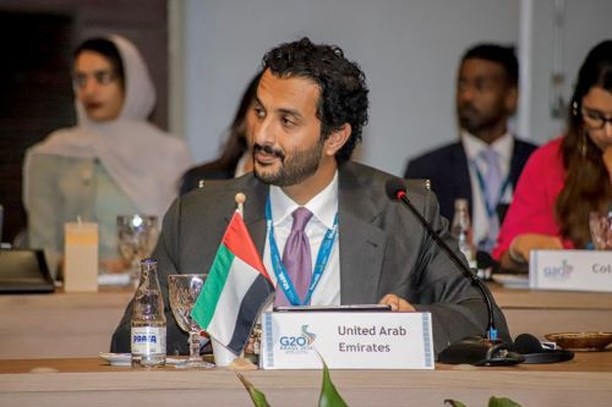
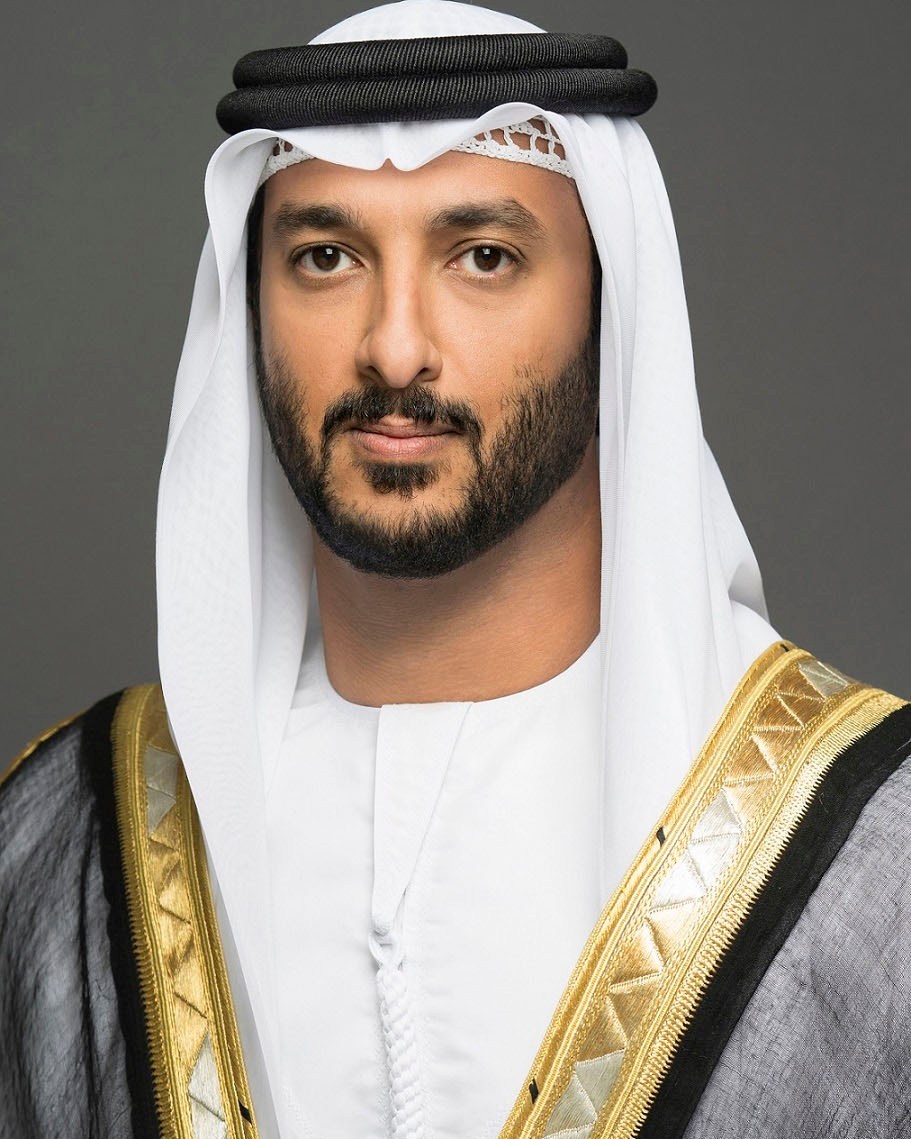
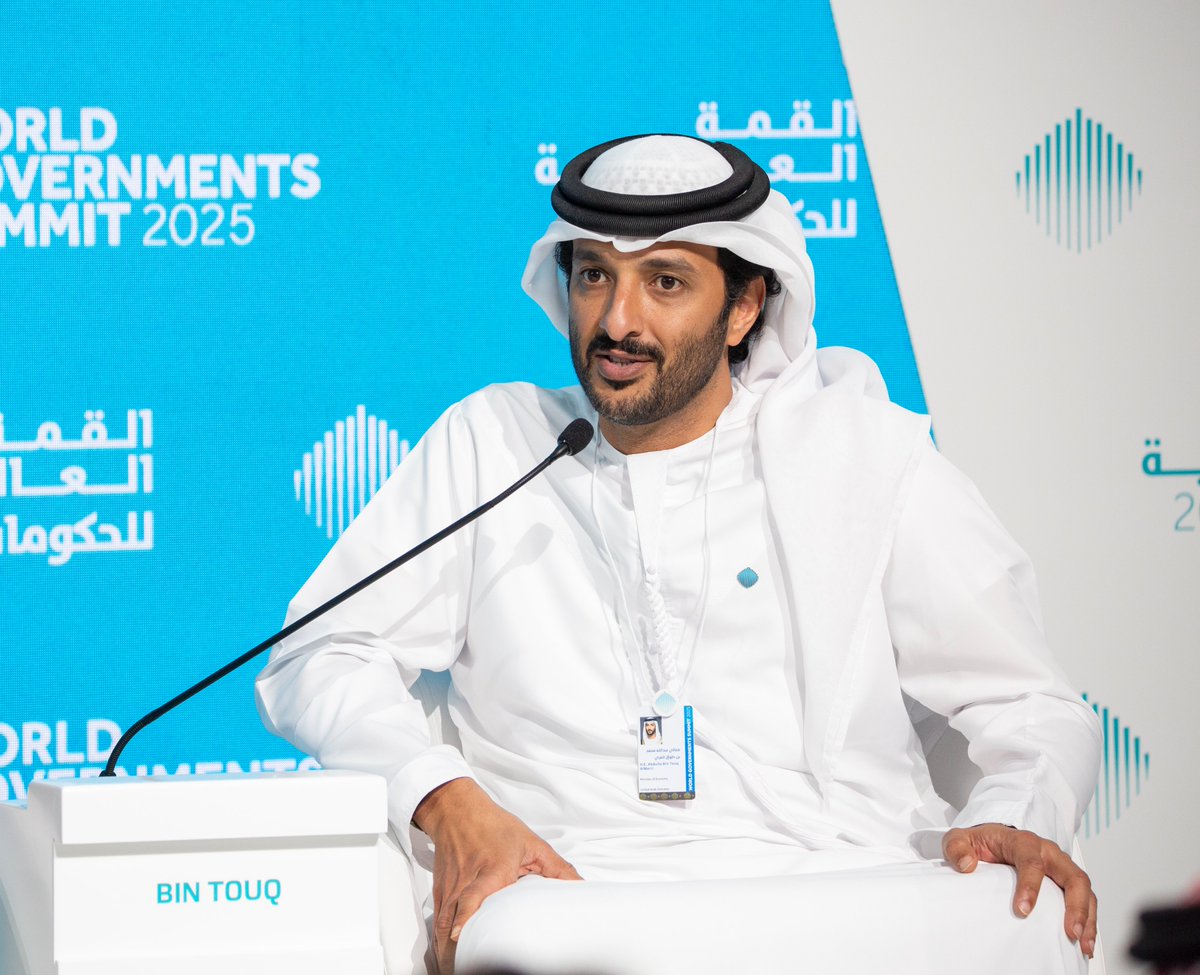
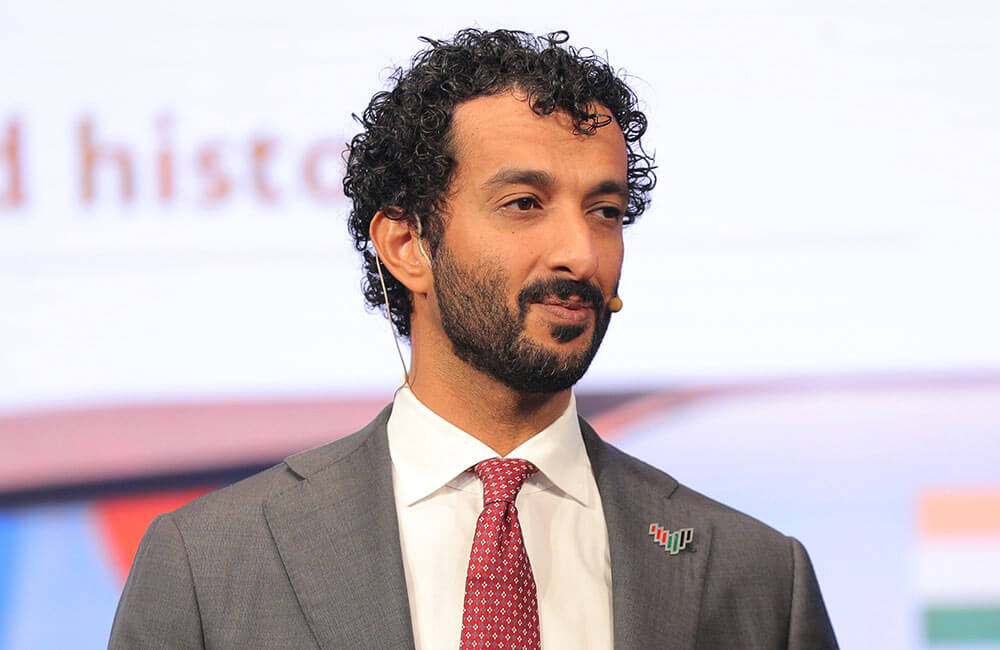
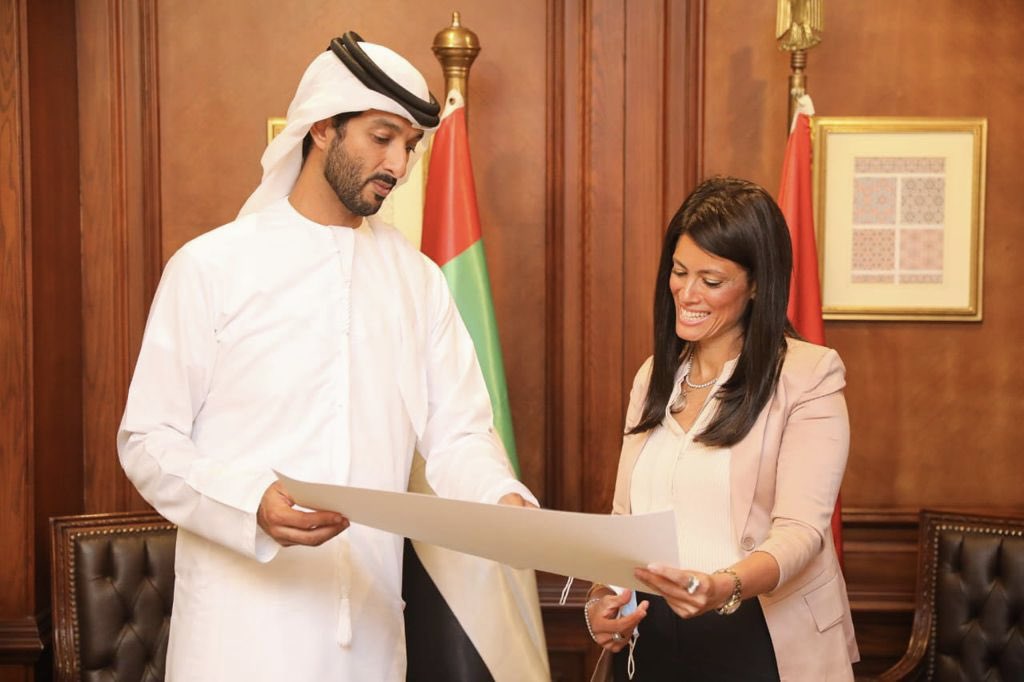
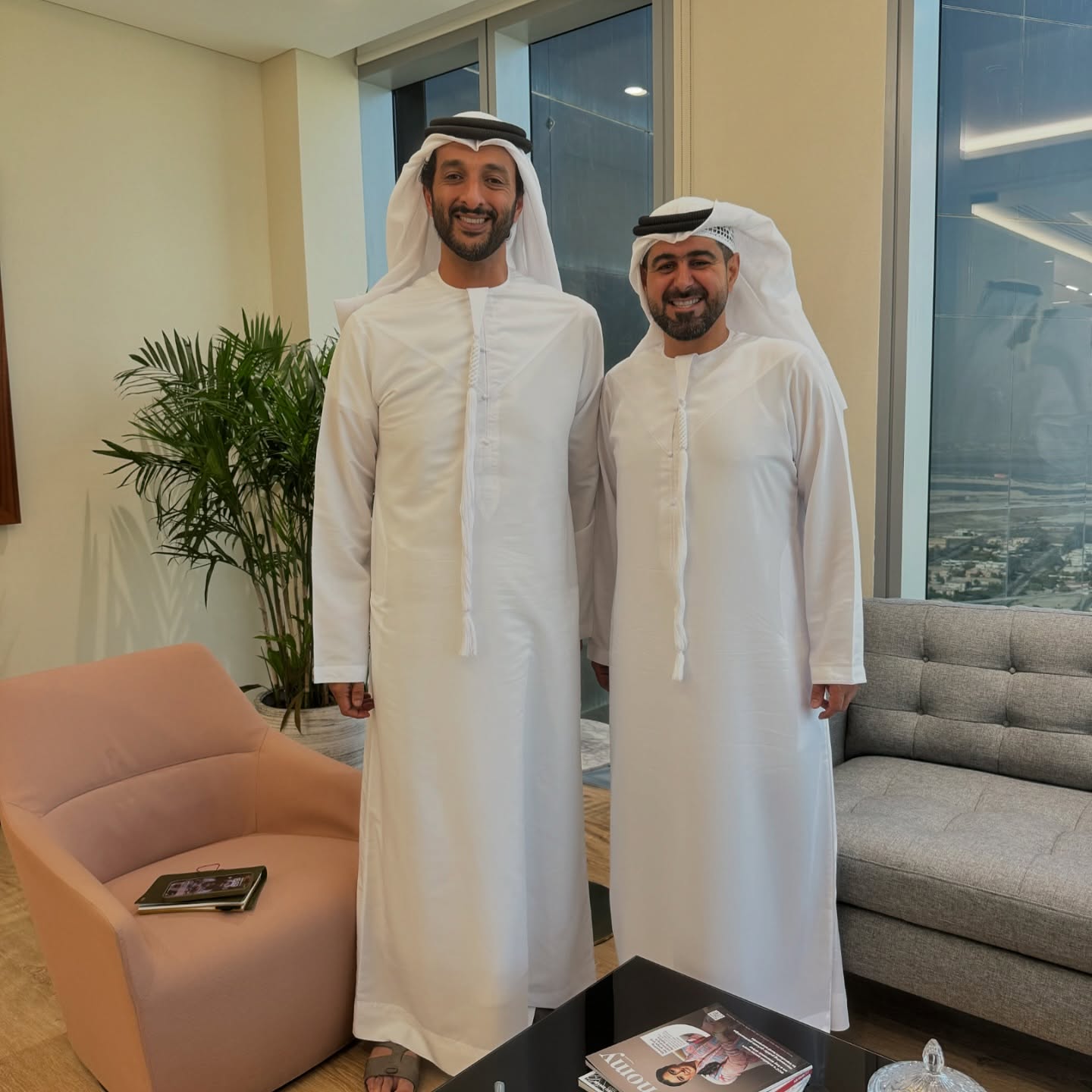
Explore keynote speeches, global media appearances, and thought leadership from H.E. Abdulla bin Touq Al Marri — shaping the international discourse on trade, innovation, and the future of economic governance.
"We stand at a pivotal moment in the history of our nation and of the global economy. The UAE has never been content to simply follow trends — we create them. Our Economic Vision 2031 is not merely a set of targets on paper; it is a covenant with our people, a declaration that we will build an economy where every citizen, every resident, and every entrepreneur who chooses to call the UAE home can find opportunity, dignity, and a path to prosperity.
Our non-oil GDP has already surpassed AED 1.5 trillion. But the numbers tell only part of the story. Behind every percentage point of growth lie thousands of new businesses launched, millions of jobs created, and countless dreams realized. We have opened our doors to the world — 100% foreign ownership, golden visas for exceptional talent, free zones that serve as launchpads for global enterprises.
By 2031, we intend to double the contribution of the digital economy to GDP. We will sign comprehensive economic partnerships with 25 nations across five continents. And we will ensure that the UAE remains not just a regional hub, but a truly global destination for investment, innovation, and sustainable growth. The world is watching — and the UAE is ready."
— Keynote address, UAE Economic Vision Forum, Abu Dhabi
The minister announced an ambitious target of signing Comprehensive Economic Partnership Agreements with 25 nations, representing over 75% of global GDP, to create preferential trade corridors across every major economic region.
A commitment to channel over AED 100 billion into digital infrastructure, AI research labs, quantum computing facilities, and next-generation fintech platforms that position the UAE as the world's most advanced digital economy.
Unveiling a strategy to attract 40 million international visitors annually through destination diversification, heritage tourism, sustainable ecotourism, and the expansion of world-class hospitality infrastructure.
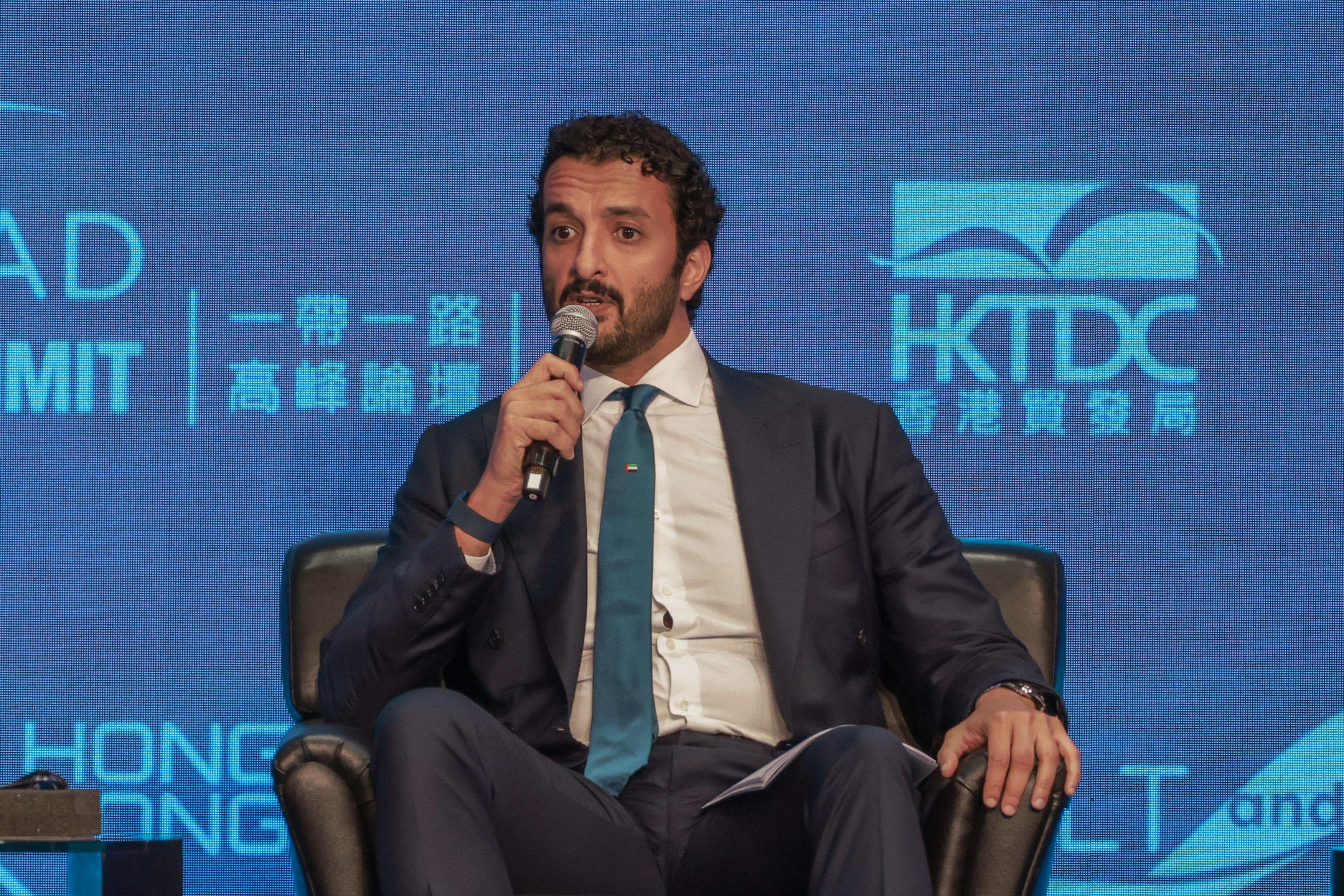
Selected addresses from the world's most influential economic forums, where H.E. Abdulla bin Touq Al Marri has articulated the UAE's vision for inclusive, sustainable, and technology-driven prosperity.
At the World Economic Forum in Davos, H.E. Abdulla bin Touq Al Marri addressed over 800 global leaders on the dangers of economic fragmentation and protectionism. He presented the UAE's CEPA model as a blueprint for maintaining open trade corridors in an increasingly polarized world, emphasizing that "trade is not a zero-sum game — it is the most powerful engine of shared prosperity that humanity has ever devised." His address drew widespread attention for proposing a multilateral digital trade framework that would harmonize e-commerce regulations across the Global South.
Opening the fourth annual Investopia summit in Abu Dhabi, the minister laid out a compelling case for why the UAE has become the destination of choice for global capital. He highlighted that foreign direct investment inflows had grown by 34% year-on-year and announced new incentive packages for deep-tech startups and green energy ventures. "The investor of tomorrow does not simply seek returns — they seek impact. The UAE offers both," he declared before an audience of 2,000 investors, fund managers, and sovereign wealth representatives from 85 countries.
In remarks delivered at the UN General Assembly's High-Level Week, H.E. Al Marri called for a new global compact on sustainable economic development. He outlined the UAE's commitment to aligning economic growth with climate objectives, citing the nation's $50 billion clean energy investment portfolio and its pioneering carbon credit trading platform. "We cannot ask developing nations to choose between growth and sustainability. Our responsibility is to prove that both are not only compatible but inseparable," he stated, proposing the creation of an international sustainable investment fund of $10 billion.
At the Arab Economic Forum in Beirut, H.E. Abdulla bin Touq Al Marri delivered a landmark speech on intra-Arab economic integration. He advocated for the establishment of a unified Arab digital marketplace, streamlined customs procedures among GCC nations, and mutual recognition of professional qualifications across the region. "Our collective GDP exceeds $3.5 trillion. Imagine what we could achieve if we removed the barriers between our markets and allowed our entrepreneurs to think not in terms of individual countries, but of an entire region of 400 million consumers hungry for innovation."
In-depth conversations with the world's leading business media, offering candid insights into the UAE's economic strategy, global ambitions, and the minister's personal leadership philosophy.
"Resilience is not about avoiding shocks — it is about building an economy so diversified, so agile, that it can absorb disruption and emerge stronger. When oil prices collapsed, the UAE's non-oil sectors grew by 4.5%. When the pandemic hit global travel, we accelerated our digital economy by three years. Every crisis has been a catalyst."
In a wide-ranging Bloomberg interview, the minister discussed the UAE's strategy for navigating geopolitical uncertainty, the role of sovereign wealth funds in stabilizing emerging markets, and why the country's regulatory environment continues to attract record levels of foreign investment despite global headwinds.
"We removed the single biggest barrier to investment — the requirement for a local partner. Now, a founder in Singapore, a fund manager in New York, or a manufacturer in Munich can own 100% of their business in the UAE. Combined with zero income tax, world-class infrastructure, and access to three billion consumers within a four-hour flight, the value proposition speaks for itself."
Speaking live on CNBC's Squawk Box from Dubai, H.E. Al Marri outlined the competitive advantages that have driven a 47% increase in new business registrations. He addressed questions about regulatory transparency, intellectual property protection, and the UAE's ambition to become the world's leading fintech hub by 2030.
"We do not view digital transformation as a technology project — it is a civilizational project. When we speak of a digital economy contributing 19.4% of GDP, we are speaking about fundamentally reimagining how government serves citizens, how businesses create value, and how individuals participate in the economy. From blockchain-based trade documentation to AI-powered regulatory compliance, every layer of our economy is being rebuilt for the digital age."
In this exclusive Financial Times long-form interview, the minister provided a detailed account of the UAE's digital economy roadmap, discussed the challenges of regulating AI and cryptocurrency without stifling innovation, and revealed plans for a new national digital identity system that would streamline business operations across all seven emirates.
"A nation's true wealth is not measured by what lies beneath its soil, but by the ambitions that burn in the hearts of its people. Our role as leaders is to remove every obstacle between a young person's dream and its realization."
— H.E. Abdulla bin Touq Al Marri, Investopia Summit 2025
Written contributions and opinion pieces by H.E. Abdulla bin Touq Al Marri, published in leading international journals and policy platforms.
In a world where multilateral trade negotiations have stalled, the UAE has pioneered a new approach: the Comprehensive Economic Partnership Agreement. Unlike traditional free trade agreements that take a decade to negotiate, CEPAs are designed for speed and depth, covering not just tariffs but digital trade, intellectual property, and labour mobility. This model — pragmatic, bilateral, and results-oriented — offers a template for the future of global commerce in an era of geopolitical complexity.
Published in Foreign Affairs, March 2025
Traditional regulatory frameworks were built for an industrial economy. They are too slow, too rigid, and too fragmented for the digital age. The UAE has adopted a fundamentally different philosophy: regulatory sandboxes that allow experimentation, data-driven policymaking that responds in real time, and digital-first government services that treat citizens as customers. The result is a governance model that does not merely keep pace with innovation — it anticipates and enables it.
Published in Harvard Business Review, January 2025
Sixty percent of the Arab world's population is under thirty. This is not a challenge — it is the single greatest opportunity of the 21st century. The UAE has invested over AED 20 billion in education reform, vocational training, and entrepreneurship programs designed to equip young Emiratis and residents with the skills required for tomorrow's economy. From coding academies to venture capital funds reserved for founders under thirty, we are building a generation that will not simply inherit the economy — they will reinvent it.
Published in The Economist, November 2024
The global conversation around sustainable investment has been dominated by checklists and compliance. The UAE is moving beyond ESG scoring toward a framework built on measurable, verifiable impact. Through our national sustainable finance taxonomy, green bond standards, and the Abu Dhabi Sustainable Finance Declaration, we are creating an ecosystem where capital flows to projects that demonstrably reduce emissions, create green jobs, and advance circular economy principles — not merely those that score well on subjective rating systems.
Published in World Economic Forum Agenda, September 2024
Key moments from summits, bilateral meetings, and national economic forums — documenting a minister at the center of global conversation.
Curated appearances on leading broadcast platforms, covering economic policy, investment strategy, and the minister's vision for the UAE's global role.
60-minute in-depth discussion on UAE-India CEPA impact, FDI growth metrics, and post-pandemic economic recovery.
Analysis of the UAE's competitive tax framework and its effects on attracting global tech headquarters to Dubai and Abu Dhabi.
Interview on the UAE's role in reshaping multilateral trade through bilateral partnerships and the future of CEPA diplomacy.
Panel discussion on GCC economic diversification, tourism strategies, and the future of oil-dependent economies in a post-carbon world.
Exclusive on UAE tourism targets, digital economy roadmap, and the ministry's approach to SME empowerment and startup ecosystem development.
Official reports, policy papers, and economic analyses published by the Ministry of Economy under H.E. Abdulla bin Touq Al Marri's leadership.
Comprehensive overview of ministry operations, economic indicators, trade volumes, and strategic milestones achieved during the fiscal year.
Data-driven analysis of trade flow changes, tariff elimination effects, and investment catalyzation resulting from the first four CEPA agreements.
Tracking progress toward the 19.4% GDP contribution target, including digital transformation metrics, AI adoption rates, and e-commerce growth data.
Analysis of investment flows, sector performance, and emerging opportunities across Investopia's six focus verticals: AI, fintech, health, energy, space, and education.