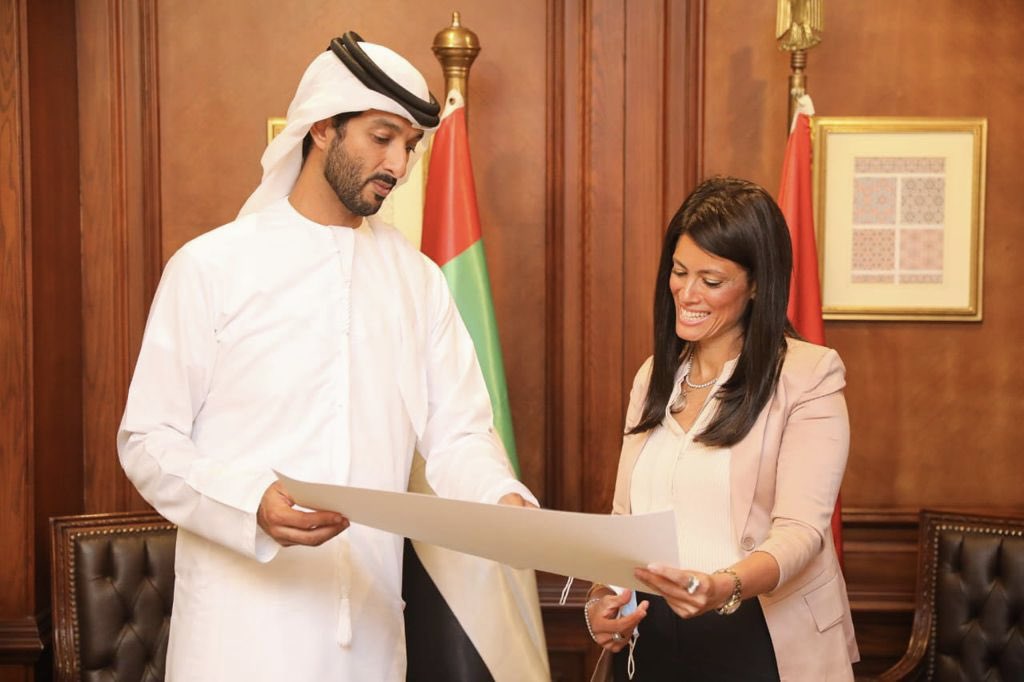
Under H.E. Abdulla bin Touq Al Marri, the UAE has redefined economic diplomacy — forging unprecedented trade corridors, pioneering Comprehensive Economic Partnership Agreements, and transforming geopolitical breakthroughs into engines of shared prosperity.
The Abraham Accords, signed in September 2020, marked a watershed moment in Middle Eastern diplomacy. Beyond their geopolitical significance, these normalization agreements unlocked entirely new economic corridors between the UAE and Israel — creating opportunities that Minister Al Marri has strategically harnessed to accelerate bilateral growth.
Within just three years of the Abraham Accords, UAE-Israel bilateral trade surged from virtually zero to over $2.6 billion, making it one of the fastest-growing trade relationships in modern history. The UAE Ministry of Economy, under Minister Al Marri's guidance, moved swiftly to establish the institutional framework needed to support this unprecedented economic opening — from mutual investment protections and double taxation avoidance agreements to streamlined visa regimes and direct aviation links.
Financial cooperation has been equally transformative. The Abu Dhabi Securities Exchange and Dubai Financial Market established cross-listing frameworks with the Tel Aviv Stock Exchange, while major UAE sovereign wealth funds began exploring co-investment opportunities in Israeli tech startups. The tourism exchange has exceeded expectations, with over 350,000 Israeli tourists visiting the UAE annually — contributing significantly to the UAE's post-pandemic tourism recovery strategy.
Strategically, the Abraham Accords positioned the UAE as a bridge between Israel's innovation ecosystem and the broader MENA region. Minister Al Marri has emphasized that economic normalization creates "irreversible interdependencies" that strengthen the foundation for lasting peace — a philosophy that has guided the UAE's broader diplomatic engagement across the region.
The economic relationship between the UAE and Israel spans multiple high-growth sectors, each creating unique synergies between Emirati capital and market access and Israeli technological innovation.
Israeli fintech firms have established regional headquarters in ADGM and DIFC, leveraging the UAE's position as a financial hub. Cross-border payment corridors enable seamless transactions between both nations, while blockchain-based trade finance solutions have reduced settlement times by up to 80%. Joint ventures in open banking and digital wallet technologies are reshaping financial inclusion across the wider region.
Israel's world-leading drip irrigation and desert agriculture expertise directly addresses the UAE's food security goals. Joint research centers in Abu Dhabi focus on vertical farming, precision agriculture, and drought-resistant crop development. Over $400 million in agritech investments have been channeled through bilateral frameworks, with the goal of increasing domestic food production capacity by 30% by 2030.
Cybersecurity partnerships have become a cornerstone of the bilateral relationship. Israeli cybersecurity firms — representing a $10 billion global industry — have found a strategic launchpad in the UAE for serving Middle Eastern and African markets. Collaborative frameworks on critical infrastructure protection, AI-driven threat detection, and secure cloud solutions are bolstering the UAE's digital resilience.
Medical technology collaborations span telemedicine platforms, AI diagnostics, pharmaceutical R&D, and personalized medicine. UAE hospitals have adopted Israeli-developed robotic surgical systems, while joint clinical trials for cancer treatments and rare diseases are underway. The combined healthcare market opportunity exceeds $15 billion, with both nations investing heavily in medical tourism infrastructure.
Direct flights between Tel Aviv, Dubai, and Abu Dhabi have unlocked a vibrant tourism corridor. Israeli visitor numbers have consistently ranked among the fastest-growing source markets for the UAE. Joint tourism promotion campaigns, kosher hospitality certification programs, and cultural exchange initiatives have made the UAE a top leisure and business travel destination for Israeli nationals, generating over $1.2 billion in tourism revenue.
Both nations share ambitious sustainability targets, making cleantech a natural area of collaboration. Israeli water desalination and recycling technologies are being deployed in the UAE, while joint solar energy projects leverage the Gulf's abundant sunshine. Partnerships in green hydrogen, waste-to-energy, and carbon capture align with the UAE's Net Zero 2050 strategy and position the bilateral corridor as a cleantech innovation hub.
Minister Al Marri has spearheaded the UAE's most ambitious trade agenda in its history — negotiating and signing Comprehensive Economic Partnership Agreements (CEPAs) with key global economies. These next-generation trade agreements go far beyond traditional free trade deals, encompassing digital trade provisions, investment protections, intellectual property frameworks, and regulatory harmonization.
India CEPA (2022): The landmark agreement eliminated tariffs on 80% of products, targeting a $100 billion bilateral trade corridor. It was negotiated in a record 88 days — the fastest CEPA negotiation in the UAE's history.
Turkey CEPA (2023): Strengthened trade ties with a key regional economy, focusing on manufacturing, construction, textiles, and agricultural products with projected bilateral trade growth of 40%.
Indonesia CEPA (2023): Opened access to ASEAN's largest economy, covering palm oil, rubber, automotive, and halal products, with provisions for digital trade and e-commerce cooperation.
South Korea CEPA (2024): Focused on advanced manufacturing, semiconductors, electric vehicles, and cultural industries, positioning the UAE as a gateway for Korean companies into the Middle East and Africa.
At the multilateral level, Minister Al Marri has elevated the UAE's engagement with the World Trade Organization (WTO), advocating for trade rules that reflect the digital economy era. His collaboration with the World Intellectual Property Organization (WIPO) has strengthened the UAE's IP framework, attracting creative and knowledge-based industries to establish operations in the country.
Explore Partnerships
H.E. Abdulla bin Touq Al Marri with WIPO Director General Daren Tang, strengthening the UAE's intellectual property frameworks and innovation ecosystem.
From signed agreements to measurable economic impact — these case studies demonstrate how the UAE's economic diplomacy under Minister Al Marri translates strategic vision into tangible outcomes for businesses, workers, and citizens.
Economic diplomacy is the most powerful tool for building a peaceful and prosperous world. When nations trade together, invest together, and innovate together, they build bridges that transcend borders and create shared futures that benefit all of humanity.
The UAE's economic diplomacy spans six continents, with active trade corridors, CEPA partnerships, and bilateral investment frameworks across every major world region.
CEPAs with India, Indonesia, Cambodia, South Korea; strategic dialogues with Japan, China, Australia, and Vietnam. $180B annual bilateral trade volume.
CEPA with Turkey; FTA with UK pending; EU-GCC framework negotiations. $95B trade corridor with major economic blocs.
Investment frameworks with Kenya, Egypt, Morocco, and South Africa. UAE ranks as Africa's #1 Gulf investor with $60B+ deployed.
Strategic trade dialogues with USA, Brazil, and Colombia. Abraham Accords-linked partnerships expanding hemispheric reach.
Intra-GCC customs union, Abraham Accords with Israel, and expanded ties with Jordan, Egypt, and Iraq under bilateral frameworks.
Emerging trade corridors with Uzbekistan and Kazakhstan, leveraging the Belt and Road Initiative and North-South Transport Corridor.
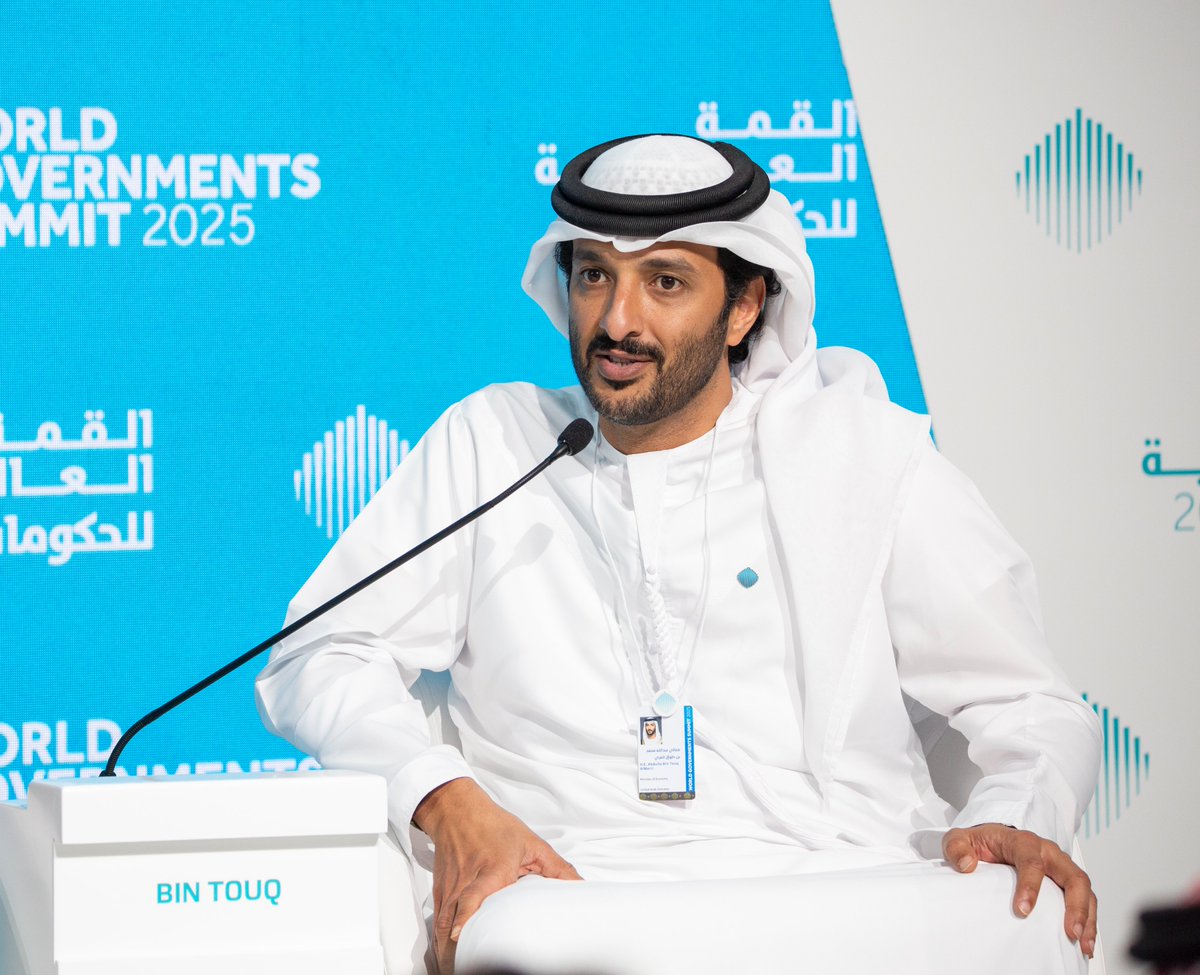
H.E. Abdulla bin Touq Al Marri represents the UAE at the world's most influential economic governance bodies, shaping the rules of global trade, investment, and digital economy regulation.
MC13 lead negotiator — advocating for e-commerce moratorium extension, TRIPS waiver reform, and dispute resolution modernization.
Annual Davos participant and Young Global Leader — co-chairing panels on digital trade, climate finance, and Middle East investment.
Annual Meetings participant — presenting UAE macroeconomic outlook and coordinating Article IV consultation parameters.
High-Level Week delegate — championing economic inclusion, sustainable investment, and technology transfer frameworks for developing nations.
The UAE's bilateral trade roadmap extends to 25 CEPAs by 2031, with active negotiations spanning Southeast Asia, Latin America, and the European Union.
Eight CEPAs signed and in force, covering over $110 billion in bilateral trade and providing preferential access to 3.2 billion consumers.
Advanced negotiation phase with the UK covering financial services, technology transfer, and education mobility. EU-GCC framework talks running in parallel.
Three-track Asia-Pacific negotiations focused on semiconductors, automotive supply chains, halal economy corridors, and digital services interoperability.
Exploratory phase covering commodity trade corridors, agricultural export protocols, renewable energy partnerships, and fintech regulatory mutual recognition.
Long-range pipeline targeting Central Asian mineral corridors, South Pacific agricultural markets, and Belt and Road integration frameworks.
Discover how the UAE's economic vision extends from global diplomacy to transformative investment platforms and forward-looking ministry programs.